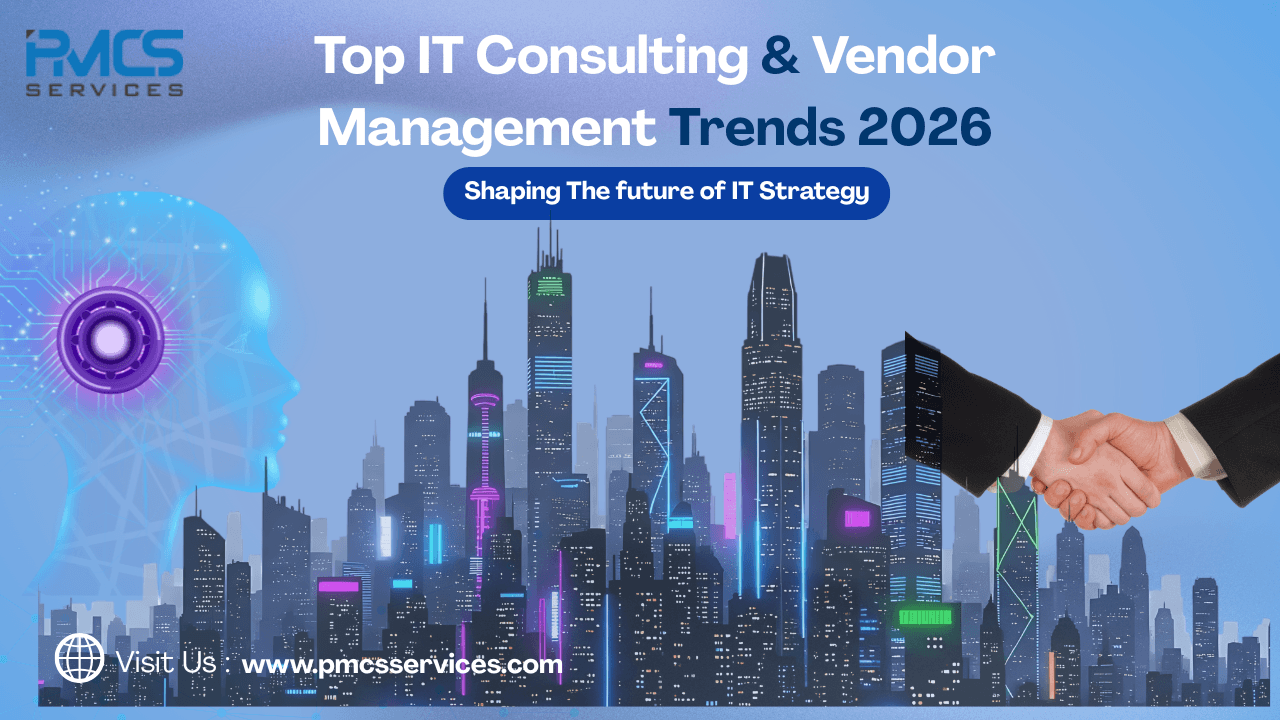

Why 2026 Is a Turning Point for IT Leaders
The role of IT consulting has fundamentally changed. In 2026, technology decisions are no longer isolated technical choices — they directly impact business resilience, regulatory exposure, vendor performance, and long-term growth.
Organizations today are navigating a complex environment shaped by rapid AI adoption, evolving cybersecurity threats, tighter compliance requirements, and increasingly interconnected vendor ecosystems. As a result, CIOs, procurement leaders, and vendor managers are under pressure to make smarter, faster, and more accountable decisions.
This article highlights the most important IT consulting and vendor management trends shaping 2026, with practical insights to help organizations stay competitive, compliant, and future-ready.
1. AI Governance Has Become a Board-Level Priority
Artificial Intelligence is no longer experimental. From analytics and automation to contract review and service monitoring, AI is deeply embedded in enterprise operations. However, this growth has introduced new risks related to data privacy, bias, accountability, and regulatory compliance.
In 2026, organizations are establishing formal AI governance frameworks that define how AI systems are approved, monitored, and audited. These frameworks often include:
- Clear ownership and accountability
- Data usage and privacy controls
- Human oversight requirements
- Vendor transparency obligations
Learn more about AI governance standards: https://www.nist.gov/artificial-intelligence
Vendor contracts increasingly include AI-specific clauses addressing explainability, risk reporting, and ethical use. Without these controls, businesses expose themselves to operational failures and reputational damage.
2. Outcome-Based Contracts Are Replacing Traditional Models
Traditional time-and-materials contracts are losing relevance. Businesses now demand contracts that reflect measurable business outcomes, not just effort or activity.
Outcome-based contracts in 2026 focus on:
- Performance-linked payments
- Clearly defined service results
- Shared accountability between client and vendor
- Transparent reporting against agreed KPIs
This shift benefits both parties. Clients gain clarity on value delivery, while vendors are incentivized to innovate and optimize performance rather than maximize billable hours.
Successful organizations are redesigning contracts to align commercial terms with operational and strategic goals.
For more information about our services, visit: https://pmcsservices.com/services/
3. Third-Party Risk Management Is Now Multi-Tier
Vendor risk no longer stops at direct suppliers. In today’s interconnected ecosystems, third-party failures can originate from fourth or fifth-level subcontractors.
Modern Third-Party Risk Management (TPRM) programs now include:
- Mapping of multi-tier vendor dependencies
- Continuous risk monitoring instead of annual reviews
- Cyber, operational, and compliance risk scoring
- Automated alerts and escalation processes
In 2026, effective TPRM is proactive rather than reactive. Organizations that invest in real-time visibility and structured risk governance are better equipped to prevent disruptions before they escalate.
4. Vendor Consolidation Is Driving Strategic Partnerships
Rather than managing dozens of disconnected vendors, many organizations are consolidating their supplier base. The goal is not cost-cutting alone — it is strategic alignment.
Vendor consolidation allows organizations to:
- Reduce operational complexity
- Improve governance and accountability
- Build deeper, long-term partnerships
- Enable co-innovation and shared growth
Strategic vendors are selected based on capability maturity, cultural fit, risk posture, and long-term vision, not just pricing.
Learn more about our consulting approach: https://pmcsservices.com/about
5. Cybersecurity Is Embedded in Every Contract
Cybersecurity is no longer a technical afterthought. In 2026, it is a core business risk that influences vendor selection, contract structure, and service delivery.
Key cybersecurity expectations now include:
- Zero-Trust architecture adoption
- Strong identity and access management
- Incident response and breach notification clauses
- Continuous security posture monitoring
Organizations are embedding security obligations directly into SLAs and vendor governance frameworks, ensuring accountability across the supply chain.
6. Hybrid and Multi-Cloud Environments Are the Standard
Most enterprises now operate across hybrid and multi-cloud environments to balance scalability, resilience, and compliance requirements.
This shift requires advanced consulting expertise in:
- Cloud architecture and integration
- Data portability and vendor lock-in mitigation
- Disaster recovery and business continuity
- Cost optimization across platforms
Vendor contracts must clearly define responsibilities for uptime, data protection, service portability, and exit strategies.
7. Ethics, Sustainability, and Digital Responsibility Matter More Than Ever
Technology decisions are increasingly evaluated through ethical and sustainability lenses. Stakeholders expect organizations to demonstrate responsibility in how digital systems are designed and deployed.
In 2026, digital responsibility includes:
- Ethical AI usage
- ESG alignment in IT operations
- Transparency in data handling
- Inclusive and responsible automation
Organizations that embed these principles into their IT strategy build stronger trust with customers, partners, and regulators.
8. Real-Time Reporting and Predictive Insights Are Essential
Static reports are no longer sufficient. Decision-makers now expect real-time visibility into vendor performance, risk exposure, and operational health.
Advanced analytics and dashboards provide:
- Live SLA and KPI tracking
- Early risk detection
- Predictive insights for decision-making
- Faster response to performance gaps
This capability enables leaders to move from reactive problem-solving to proactive optimization.
9. Contract Lifecycle Management Is Becoming Centralized and Intelligent
Contracts are no longer passive documents. In 2026, Contract Lifecycle Management (CLM) systems are tightly integrated with procurement, risk, and analytics platforms.
Modern CLM enables:
- Automated approvals and compliance checks
- Obligation tracking and alerts
- AI-assisted contract analysis
- Improved audit readiness
Organizations that modernize CLM gain better control, reduce risk, and improve operational efficiency.
10. Talent Gaps Are Reshaping Consulting and Outsourcing
Rapid innovation has created skill gaps that many organizations cannot fill internally. As a result, consulting and managed services are increasingly used for strategic capability building, not just execution.
Key areas driving demand include:
- AI strategy and governance
- Cybersecurity leadership
- Cloud and data architecture
- Vendor negotiation and sourcing expertise
In 2026, consulting partnerships are about long-term value creation, not short-term support.
What Organizations Must Focus on in 2026
To remain competitive and resilient, organizations should:
These trends are not temporary — they define how modern enterprises operate and grow.
How PMCS Services Can Help
PMCS Services helps organizations navigate complex IT consulting, vendor management, contract optimization, and risk governance challenges with clarity and confidence.
To learn how we can support your business goals,
To connect with us, visit https://pmcsservices.com/contact