
With approximately 60 million Americans living with a disability, this demographic represents a substantial portion of the population - potential employees, customers, and partners. Ensuring ADA compliance is not just a legal obligation, but an expansion of a company’s opportunity in an ever increasingly competitive business environment.
On April 24, 2024, the Department of Justice’s (DOJ) published a rule updating the regulations for Title II of the Americans with Disabilities Act (ADA). This rule sets a standard adherence to the Web Content Accessibility Guidelines (WCAG) Version 2.1, Level AA as the technical standard for state and local governments’ web content and mobile apps.
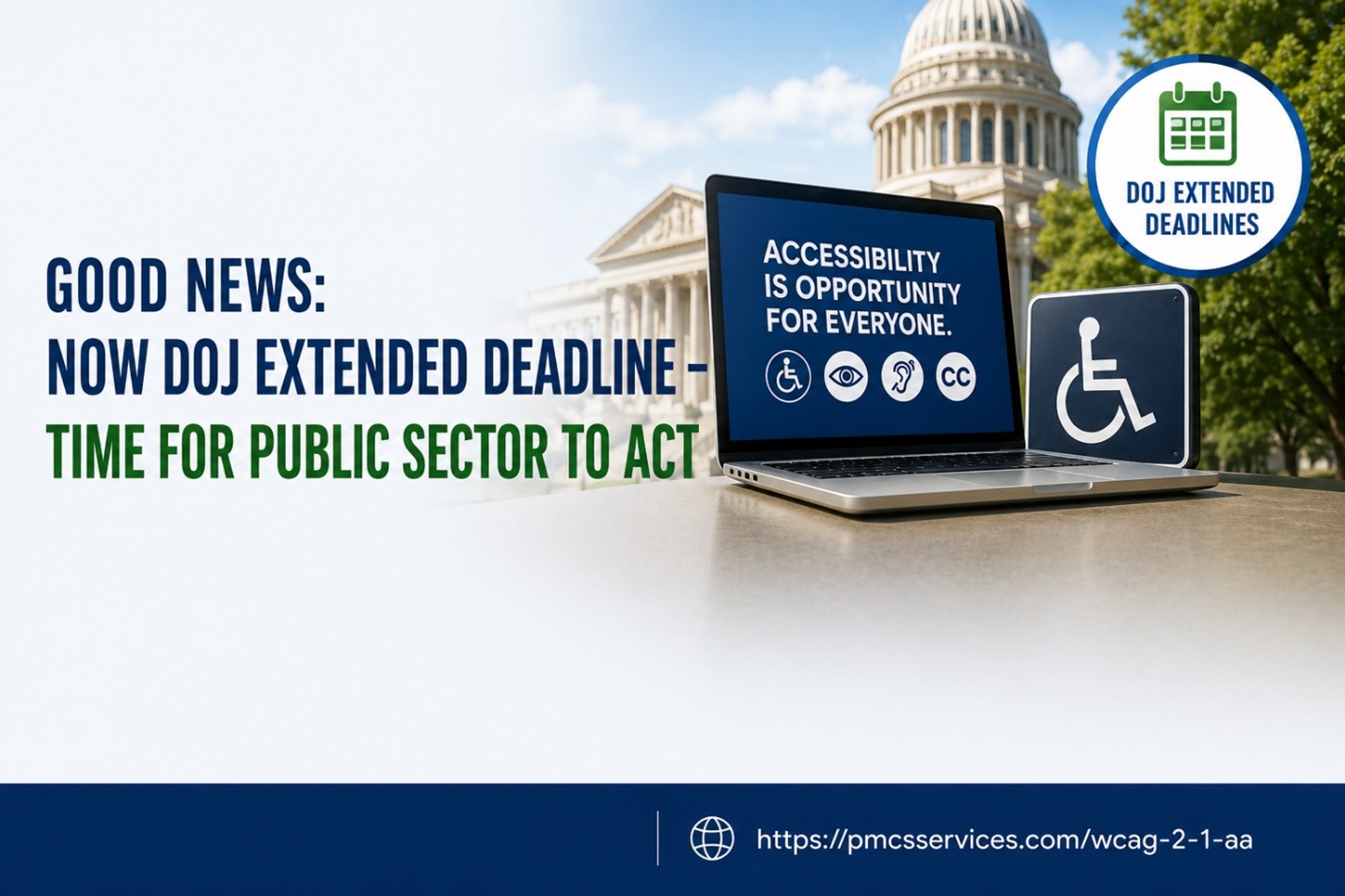
On April 20, 2026, the Federal Register published the Department’s Interim Final Rule (IFR) extending the compliance date for state and local government entities with a total population of 50,000 or more to April 26, 2027. The compliance date for public entities with a total population of less than 50,000 is extended to April 26, 2028.
Key reasons for ADA compliance include:
- Legal Protection and Reduced Liability: Following guidelines from ADA.gov and the EEOC prevents lawsuits and costly fines (e.g., first-time violations can cost over $55,000 and up to $75,000, with repeat violations reaching $150,000).
- Inclusivity and Access: Adhering to ADA standards ensures an accessible and inclusive environment for the approximate 3.8 million working-age Americans with visual impairments.
- Business Growth: An accessible business is available to a wider customer base, enhancing brand reputation and customer loyalty. The Association of People Supporting Employment First notes that customers with disabilities and their communities cover a $3 trillion market segment.
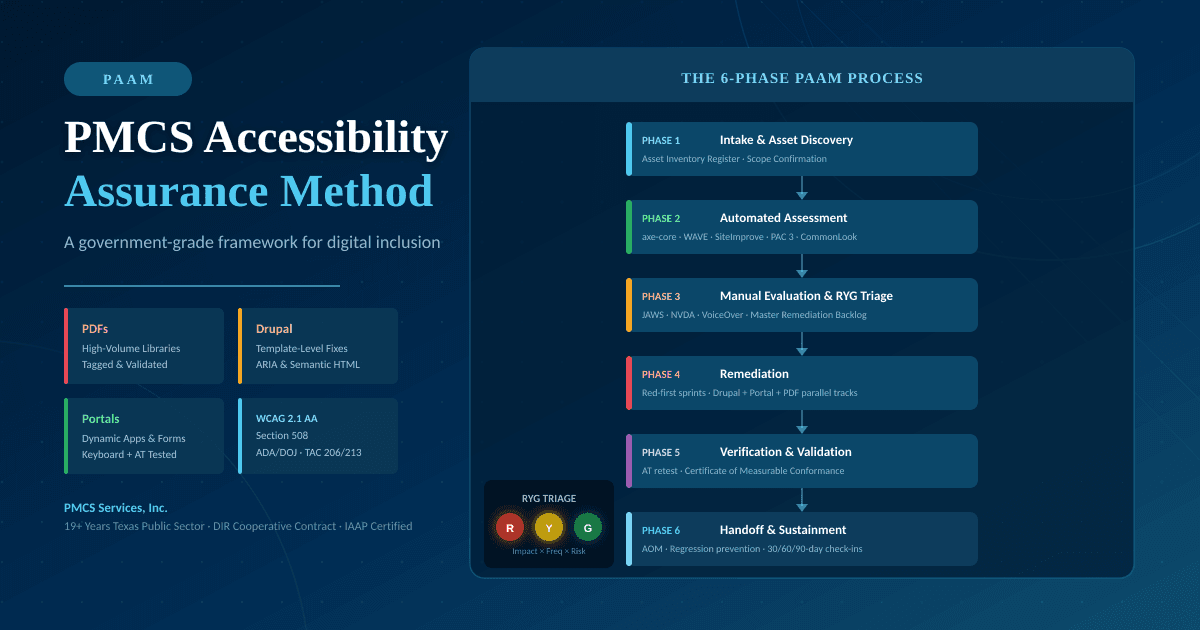
Remediation alone is not sufficient. Compliance must be actively maintained. New content, template changes, portal updates, and newly published PDFs and webpages all create fresh compliance obligations that will not be addressed by the remediation work already completed.
Without a formal maintenance plan, industry experience shows that agency websites return to pre-remediation compliance levels within 12 to 18 months of initial remediation and not because of negligence, but because content creation and publishing continue at pace without accessibility guardrails in place.
Now is the time to take advantage of the DOJ extension to ensure your state and local government entity is not only compliant by the deadline by will remain so with the implementation of an effective maintenance plan. Learn more about PMCS ADA compliance services