
Clawdbot Takeover: The Quiet Shift Toward Autonomous AI Agents.
The internet is entering a new phase. For decades, software has been reactive. Humans clicked buttons, filled forms, triggered workflows, and software responded. Now, that model is breaking.
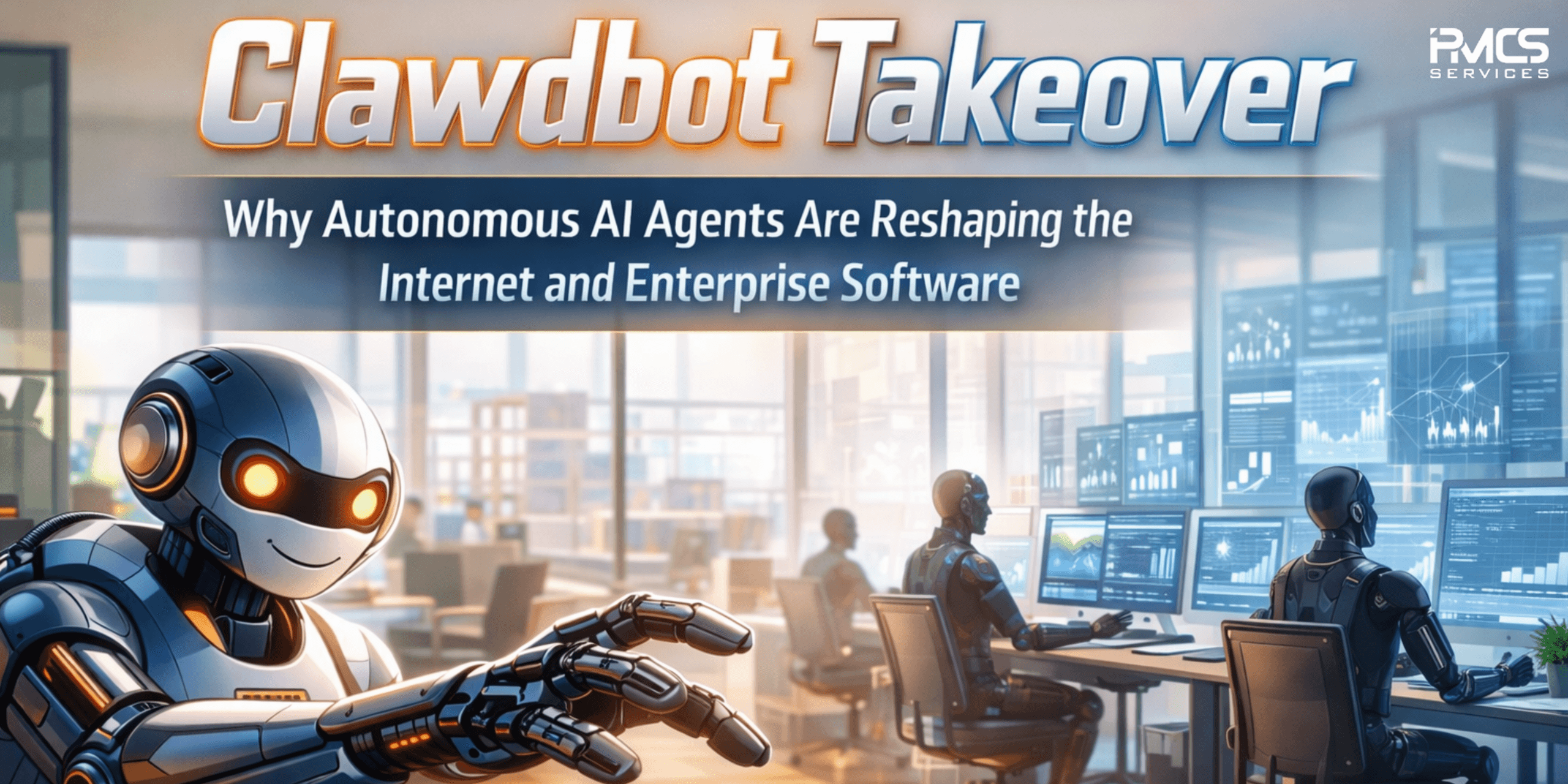
The phrase “Clawdbot Takeover” has started appearing across developer communities, AI Twitter, and enterprise discussions. It is not about a single product going viral. It is about a deeper signal: autonomous AI agents are beginning to operate systems, workflows, and decisions without human prompts.
This is not another chatbot trend. This is a structural shift in how software will be built, sold, and operated.
What Is Clawdbot Takeover?
Clawdbot is becoming shorthand for a new class of AI systems that:
- Execute tasks autonomously
- Operate across multiple tools and platforms
- Trigger workflows without manual input
- Learn from context and system state
- Act as digital workers rather than assistants
Think of Clawdbot not as a bot, but as software that behaves like an employee.
This shift aligns with the broader move toward agentic AI, where systems plan, reason, and act in real environments.
You can explore foundational research on AI agents here: https://openai.com/research https://deepmind.google/discover/blog/
Why This Matters More Than ChatGPT or Copilots
Chatbots and copilots improved productivity. However, they still required humans in the loop.
Clawdbot-style systems represent software that removes humans from the loop for many operational tasks.
Examples already happening:
- AI monitoring systems that trigger infrastructure scaling
- Sales agents that autonomously qualify and follow up leads
- Finance bots that reconcile invoices and flag anomalies
- Marketing agents that launch campaigns based on performance data
This is not automation. This is delegation to software.
The Enterprise Implication: Software Becomes Labor
For decades, enterprises bought software licenses.
Now they use AI systems instead of traditional tools.
Because of this shift, enterprise economics are changing in three main ways.
1. Cost Structure Changes
Companies used to pay employees or outsource work.
Now they pay AI systems that run all day and night.
This can reduce costs.
It can also increase speed.
2. Organizational Design Changes
Teams may become smaller.
At the same time, new orchestration layers will grow.
Companies will need fewer operators.
They will need more system architects.
3. Control and Governance Become Important
Autonomous systems introduce new risks.
Therefore, companies need clear guardrails and audit trails.
Strong policy layers will also become essential.
This is why companies like Microsoft, OpenAI, and Google are building governance frameworks:
https://learn.microsoft.com/en-us/ai/
https://cloud.google.com/ai/
The Startup Opportunity: Agent-First Companies
The Clawdbot Takeover trend is creating a new startup category: agent-first companies.
These companies are not building apps. They are building digital employees.
Examples of agent-first verticals:
- AI SDR agents for sales
- Autonomous DevOps engineers
- AI CFO and finance agents
- AI customer support operations
- AI research analysts
This is similar to how SaaS replaced on-premise software. But now agents are replacing SaaS interfaces.
Why “Takeover” Is the Right Word
This is not a hype cycle. It is a platform shift.
History shows similar transitions:
- Operating systems replaced hardware-centric computing
- The internet replaced desktop software distribution
- Mobile replaced desktop-first user experience
- Cloud replaced on-premise infrastructure
Autonomous agents will replace manual software operation.
Clawdbot Takeover is simply the visible early signal of that shift.
The Technical Stack Behind Agentic Systems
Clawdbot-style systems rely on several layers:
1. Large Language Models (LLMs)
Foundation models that reason and generate actions. https://huggingface.co/models
2. Tool Use and API Execution
Agents connect to CRMs, databases, cloud services, and internal systems.
3. Memory and Context Layers
Agents maintain long-term state and organizational context.
4. Policy and Guardrails
Rules that prevent unsafe actions and ensure compliance.
5. Orchestration Frameworks
Systems that coordinate multiple agents across tasks.
This is the emerging AI operating system layer.
Security and Trust: The Biggest Bottleneck
Autonomous systems raise serious questions:
- Who is responsible for AI decisions?
- How do companies audit AI actions?
- What happens when an agent makes a costly mistake?
This is why AI governance startups and enterprise policy layers are exploding.
Research on AI safety and governance is evolving rapidly: https://www.anthropic.com/research https://arxiv.org
Clawdbot Takeover and the Future of Work
The impact on work will be uneven and significant.
Roles Likely to Be Augmented or Replaced
- Entry-level analysts
- Customer support reps
- SDRs and lead qualifiers
- Basic operations roles
Roles That Will Grow
- AI system architects
- Governance and policy engineers
- AI product managers
- Human-AI interaction designers
The future is not human vs AI. It is humans designing AI organizations.
What Founders and Leaders Should Do Now
- Treat AI Agents as Core Infrastructure: Do not treat them as side experiments. Build them into workflows.
- Invest in Control Layers: Observability, logs, and policy engines will matter more than model performance.
- Redesign Org Charts: Assume AI agents will replace entire functional layers. Plan accordingly.
- Build Proprietary Context: The biggest moat will be domain-specific data and organizational knowledge.
The Strategic Insight: Software Is Becoming Autonomous Capital
In the past, capital meant factories, servers, and employees. Now, capital is autonomous software that produces outcomes.
Clawdbot Takeover is a signal that AI agents are becoming economic actors inside companies.
The companies that adopt this early will operate at lower cost, higher speed, and with radically different organizational structures.
This Is Not a Trend, It Is a Platform Shift
Clawdbot Takeover is not about a tool. It is about a structural change in how digital systems operate.
We are moving from:
Software as tools → Software as workers
Founders, enterprises, and technologists who understand this shift will build the next generation of companies. Those who ignore it will find themselves competing with organizations that run faster, cheaper, and with fewer humans in the loop.
The takeover has already started. The question is not if, but how quickly organizations will adapt.
For more insights on technology and AI topics, visit our homepage: https://blog.pmcsservices.com/