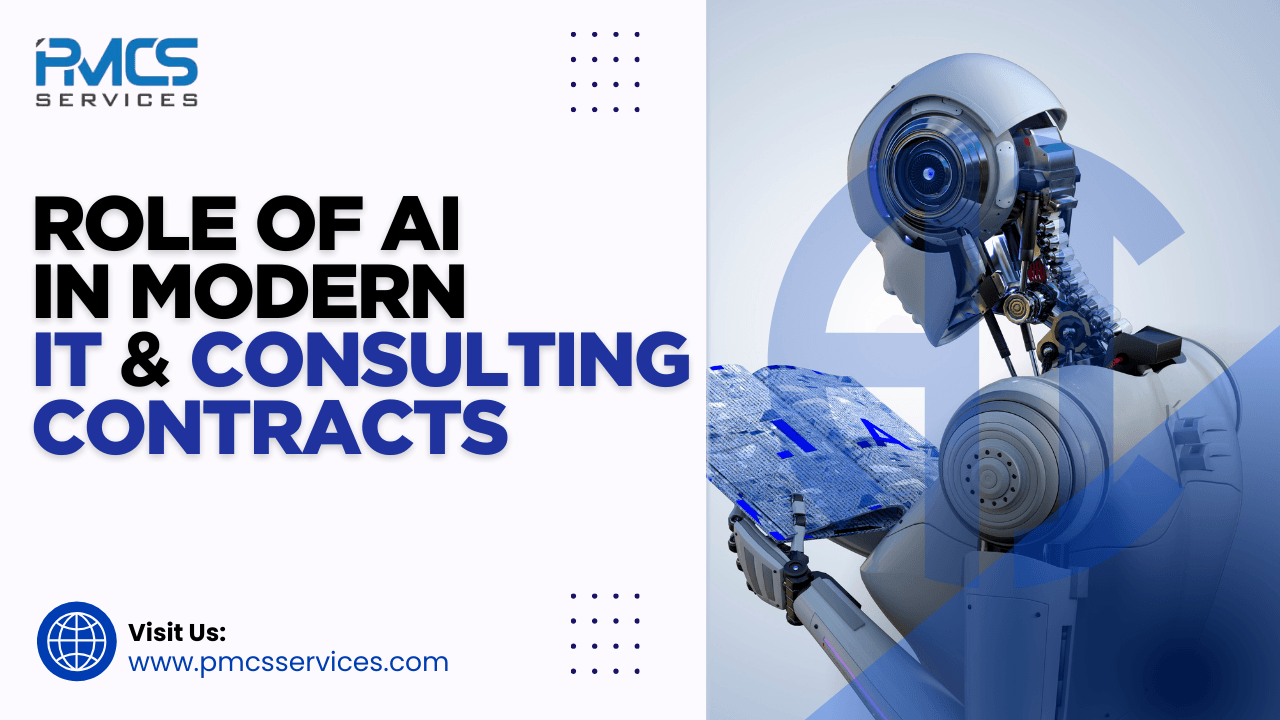

The Role of AI in Modern IT and Consulting Contracts
Contracts Are No Longer Back-Office Documents
As enterprises accelerate digital transformation, IT and consulting contracts have become strategic instruments rather than administrative necessities. Cloud adoption, multi-vendor delivery models, and outcome-based engagements have significantly increased contractual complexity. At the same time, deal cycles are shrinking and regulatory scrutiny is intensifying. In this environment, traditional, manual contract management approaches are struggling to keep pace. Artificial intelligence is rapidly emerging as a critical capability—transforming contracts from static legal documents into dynamic governance tools that actively support business outcomes. Today, artificial intelligence in consulting agreements has moved from experimentation to essential adoption. Organizations managing complex IT and consulting contracts increasingly rely on AI to improve speed, accuracy, compliance, and decision-making across the contract lifecycle.
Why AI Matters in IT and Consulting Contracts
IT and consulting contracts are among the most complex commercial documents. They contain service-level agreements (SLAs), data protection obligations, intellectual property rights, indemnities, pricing models, and change-control mechanisms. When managed manually, these contracts often introduce hidden risks—missed obligations, delayed reviews, and inconsistent enforcement. Artificial intelligence in consulting agreements uses machine learning and natural language processing (NLP) to analyze contracts at scale. AI systems can identify non-standard clauses, flag risk-heavy language, and surface compliance gaps far more quickly than traditional review processes. This enables organizations to shift from reactive contract handling to proactive governance. Real-world insight : In large, multi-vendor IT consulting programs, it is common for SLA misalignments or outdated liability clauses to remain unnoticed until delivery failures occur. AI-driven contract analysis helps surface these issues early—often before project execution begins—reducing disputes and protecting commercial value.
AI as a Governance and Advisory Capability
While AI is often positioned as a productivity tool, its real value in IT and consulting contracts lies in governance and advisory enablement. AI does not replace legal, commercial, or delivery judgment; instead, it augments it with continuous visibility and data-driven insights. From a PMCS (Project, Program, and Contract Management Services) perspective, AI strengthens contract governance by:
- Providing real-time visibility into obligations and risks
- Linking contract terms with delivery and performance data
- Enabling fact-based decision-making during negotiations and change control
This elevates contracts from legal artifacts to active instruments of delivery assurance, risk management, and financial control.
Key Applications of AI in IT and Consulting Contracts
1. AI-Powered Contract Review and Analysis
AI contract review for IT services enables organizations to analyze large volumes of contracts in minutes rather than days. These tools extract and classify clauses related to termination rights, liability caps, pricing terms, and confidentiality obligations. Platforms such as Ironclad use AI-driven contract lifecycle management to accelerate reviews, shorten negotiation cycles, and improve collaboration between legal, procurement, and business teams. Key benefits include:
- Faster contract turnaround times
- Reduced dependency on manual legal review
- Early identification of contractual risks
2. AI for Vendor Risk Assessment
Selecting the right IT and consulting partners is critical to program success. AI for vendor risk assessment evaluates suppliers using historical performance data, SLA compliance trends, dispute history, and market benchmarks. By applying predictive analytics, organizations can assess vendor risk before contract signing—reducing the likelihood of cost overruns, delivery failures, and governance breakdowns during execution.
3. AI Contract Lifecycle Management in Consulting
AI contract lifecycle management automates drafting, approvals, renewals, obligation tracking, and compliance reporting. These systems integrate with ERP and CRM platforms, ensuring alignment between contracts, delivery milestones, and billing structures. Solutions such as Sirion provide AI-powered insights into contract performance, helping consulting firms manage scope creep, revenue leakage, and compliance more effectively.
4. AI-Driven SLA Monitoring
AI-driven SLA monitoring continuously compares real-time operational data with contractual commitments. Metrics such as uptime, response times, and incident resolution are tracked automatically, with alerts triggered when thresholds are breached. This capability improves accountability, strengthens client trust, and ensures accurate calculation of service credits or penalties—particularly in managed services and long-term outsourcing agreements.
5. AI Cost Optimization in IT Consulting Contracts
AI cost optimization tools analyze invoices against contract terms to identify overbilling, unused licenses, missed discounts, and redundant services. This is especially valuable in cloud, SaaS, and managed services environments where consumption-based pricing adds complexity. AI-driven spend analytics improve cost visibility and support stronger financial governance across IT contracts.
Benefits of Using AI in IT and Consulting Contracts
Organizations adopting AI-powered contract management typically realize:
- Faster deal execution and contract closures
- Reduced legal, operational, and financial risk
- Improved visibility through dashboards and analytics
- Scalable contract operations without proportional increases in headcount
In public-sector environments, AI also improves transparency, audit readiness, and regulatory compliance in government IT consulting contracts.
Challenges and Best Practices
Despite its benefits, AI adoption requires careful planning. Common challenges include inconsistent contract data, integration with legacy systems, and the need for ongoing legal oversight. Best practices include:
- Starting with high-impact use cases such as contract review and SLA monitoring
- Standardizing templates and clause libraries
- Combining AI insights with expert human judgment
- Ensuring strong data security and regulatory compliance
- Continuously refining AI models using historical contract data
A Strategic Question for Leaders
AI is fundamentally reshaping how organizations manage IT and consulting contracts—shifting the focus from administration to governance, insight, and value protection. Actionable takeaway: If your IT and consulting contracts are driving critical delivery today, do you have continuous, AI-driven visibility into whether they are protecting value—or quietly eroding it? As we move further into 2026, AI-enabled contract intelligence is no longer optional. It is a foundational capability for organizations seeking sustainable growth, disciplined governance, and long-term competitive advantage.