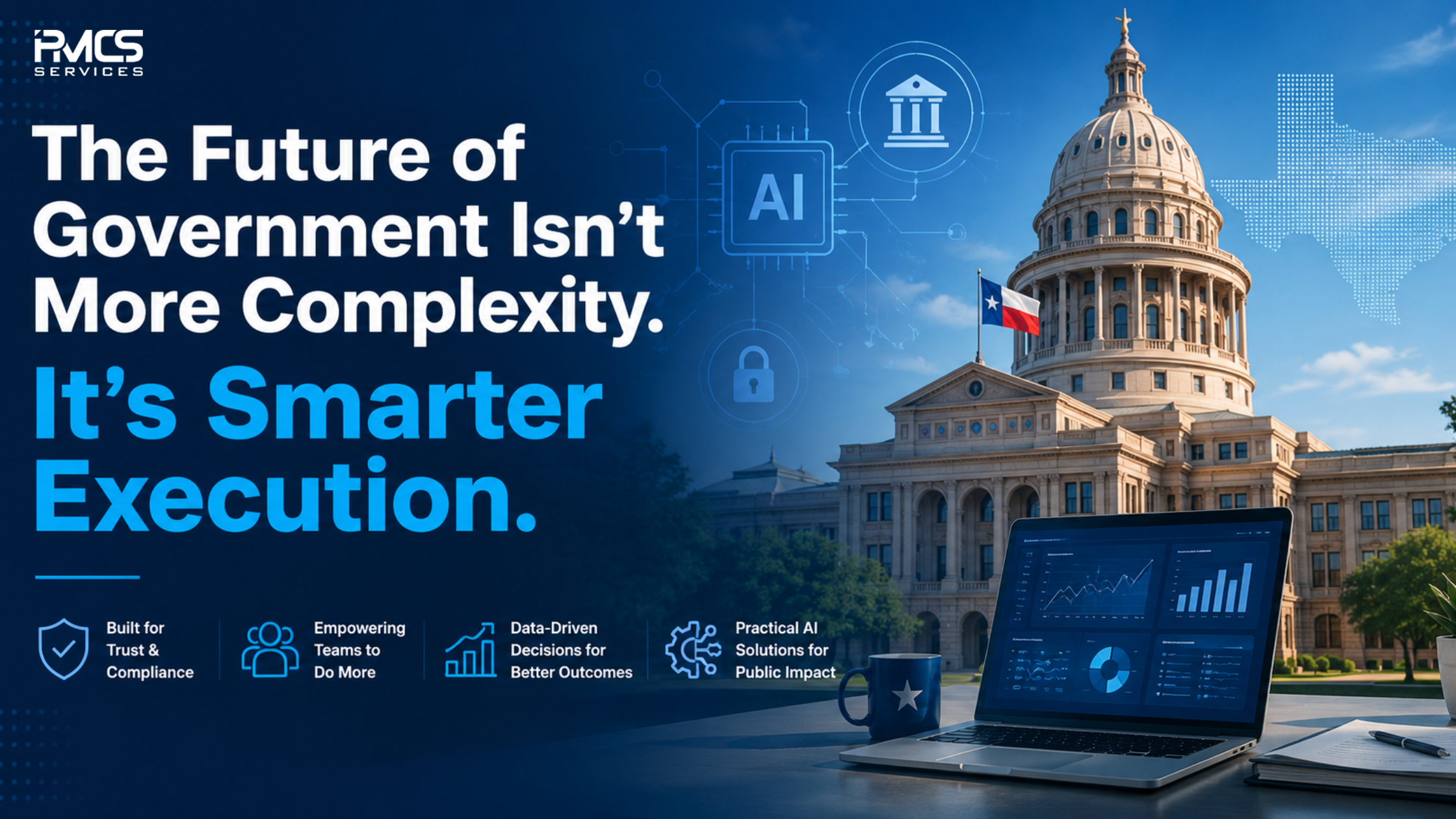

PMCS started working inside Texas state agencies twenty years ago, long before "AI" showed up on anyone's budget line. One thing hasn't changed since then: the government doesn't need another buzzword. It needs someone who actually understands what an agency can approve, what it can risk, and what it absolutely cannot.
That's the real difference behind the phrase "AI consulting for government agencies." In a Silicon Valley pitch deck, AI is a demo. Inside a state office, it has to survive a procurement review, a compliance audit, and a budget hearing, sometimes in the same week.
We've watched enough technology trends move through this industry to know the difference between hype and something that actually holds up under government rules. So let's skip the sales pitch and get into what AI consulting for government agencies really looks like, and how to spot the real thing.
What "AI Consulting for Government Agencies" Really Means
When people hear "AI consulting," they often picture someone selling a chatbot. In government, it's a lot bigger than that. Real AI consulting starts with an honest assessment of where an agency stands today: what data it has, how clean that data is, what systems are already in place, and what compliance rules apply.
From there, it covers everything from automating repetitive paperwork, to building predictive models for resource planning, to making citizen-facing services like phone lines and websites smarter and more accessible. The goal isn't to replace state employees. It's to take the repetitive, time-consuming work off their plates so they can focus on the parts of the job that actually need a human.
Here's a simple way to think about where that line sits:
Why Texas Agencies Are Paying Attention Right Now
A few things are converging at once. Staffing shortages mean agencies are being asked to do more with fewer people. Citizens who are used to instant service from their bank or food delivery app expect the same from a state website, and get frustrated fast when they don't get it.
At the same time, many agencies are running on legacy systems like Mainframe, Cobol or similar that have worked reliably for years but weren't built with AI in mind. The pressure isn't to rip those systems out. It's to figure out how AI can work alongside them without putting payroll, benefits, or compliance at risk.
The numbers back this up:
#1: AI is now the top priority for state CIOs heading into 2026, ending cybersecurity's 12-year run at the top of that list. (Source: NASCIO State CIO Top 10, 2026)
82%: State IT employees who already use generative AI daily, mostly through small, low-risk pilots. (Source: NASCIO/Grant Thornton/CompTIA State CIO Survey)
1,000+: AI-related bills introduced by state legislators in 2025 alone, a sign of how fast the compliance landscape is moving. (Source: NASCIO)
The Real Challenges Agencies Are Up Against
It's not that government IT teams don't understand AI. The challenges are structural, and they're worth naming honestly.
Legacy infrastructure. Systems like Cobol, financials, or operational need to be integrated with, not replaced overnight.
Compliance and security requirements. Anything touching citizen data, especially in health and human services, has to meet strict standards before it goes anywhere near production.
Procurement rules. Texas state agencies generally need to work with vendors who are DIR-certified, which narrows the field of who can even bid on this kind of work.
Limited bandwidth. Most IT teams are already stretched thin keeping current systems running, let alone evaluating new AI tools.
A justified culture of caution. The government moves carefully because mistakes affect real people's benefits, healthcare, and services. That caution is a feature, not a flaw, and any AI rollout needs to respect it.
What Good AI Consulting Actually Looks Like
The agencies that get real value from AI consulting tend to follow a similar pattern, no matter which department they're in.
Assessment Before Recommendations
A good consulting partner doesn't show up with a pre-packaged tool. They start by understanding the actual workflow and the actual pain point before suggesting anything.
Security and Compliance Built In, Not Bolted On
For agencies handling sensitive information, compliance can't be an afterthought. It needs to shape the solution from day one, not get reviewed after the fact.
Small Pilots Before Big Rollouts
Instead of an agency-wide overhaul, the smarter path is picking one workflow, like processing a specific type of application, and proving the approach works there first.
Training the Team, Not Just Installing a Tool
AI only helps if staff actually understand and trust it. That means real training, not a one-page user guide nobody reads.
Real-World Use Cases You Can Actually Picture
This isn't theoretical. Here's where AI consulting is already making a difference inside government workflows.
Multilingual Resident Service Lines
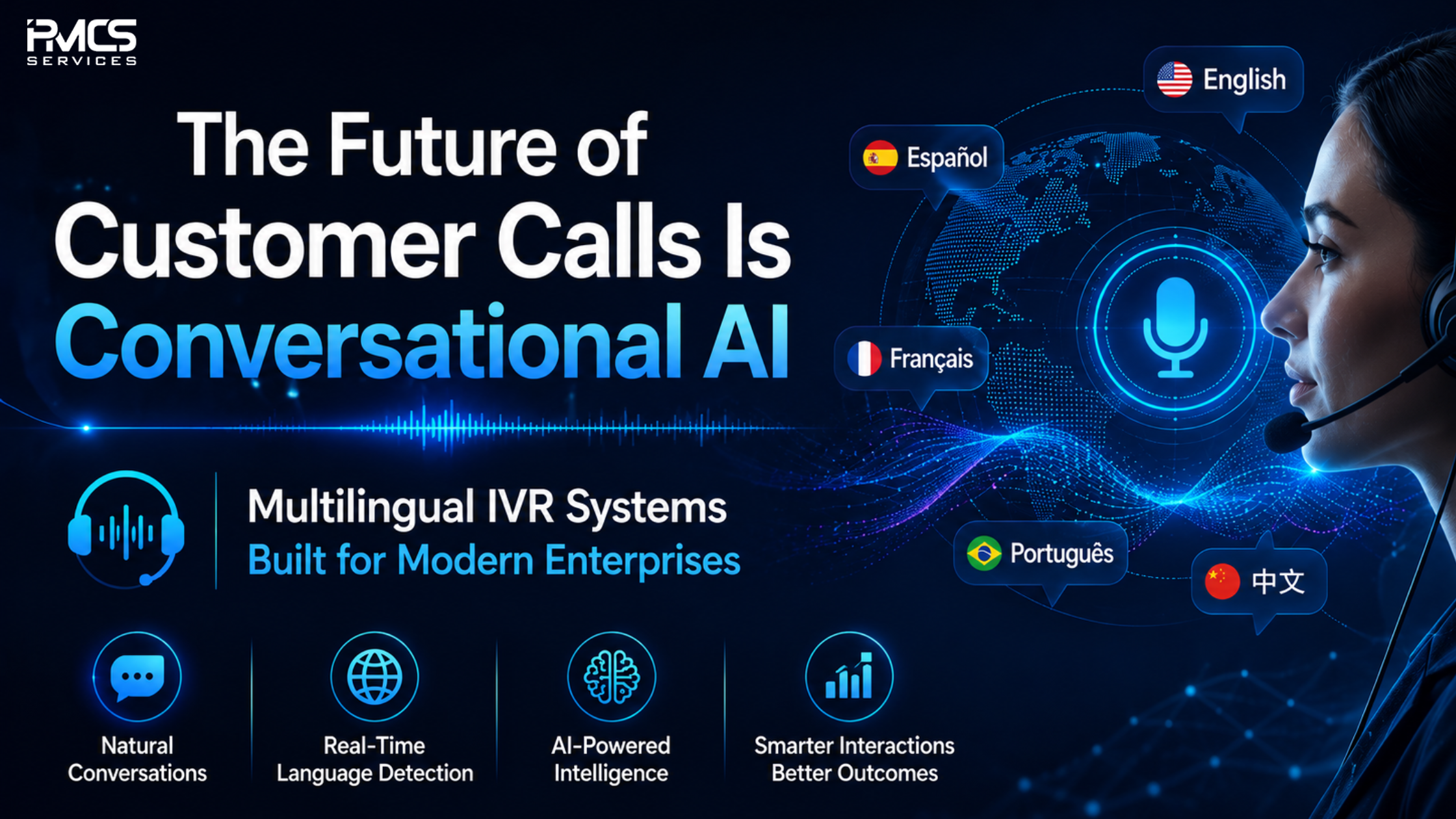
Texas has a huge, linguistically diverse population. AI-powered multilingual phone systems can answer common questions in multiple languages without making residents wait on hold for a live agent every single time.
Faster Document and Case Processing
Intelligent document processing can pull information out of scanned forms and applications automatically, cutting down the manual data entry that eats up staff time and slows down benefit approvals.
Smarter Resource and Budget Planning
Predictive analytics can help agencies forecast demand for services, so staffing and budgets get allocated based on actual patterns instead of guesswork.
Choosing the Right AI Consulting Partner
Not every vendor that says "AI" understands the government. Here's what actually matters when you're vetting one.
Texas DIR certification isn't a nice-to-have for Texas state agencies. It's often a procurement requirement, so confirm it upfront. Beyond that, look for a partner with direct experience inside agencies, not just private-sector case studies. Someone who already understands systems like CAPPS and PeopleSoft, and contract vehicles like ITSAC and DBITS, will move faster and make fewer costly mistakes than someone learning government procurement on your dime.
PMCS Services, for example, has spent close to two decades delivering cloud, AI, and enterprise solutions across Texas state agencies, including HHSC and DSHS, alongside deep specialization in CAPPS Financials, PeopleSoft, ITSAC, and DBITS work. That kind of hands-on context is hard to substitute.
Finally, the right partner sticks around after launch. AI tools need monitoring, retraining, and adjustment over time, so ongoing support matters more than a flashy kickoff presentation.
Key Takeaways
AI consulting for government agencies isn't about chasing trends or replacing people. It's about giving already-stretched teams room to breathe and giving citizens faster, more reliable service, all while staying inside the very real constraints of compliance, procurement, and budget that come with public sector work.
The agencies that succeed with AI aren't the ones that move the fastest. They're the ones that start with an honest assessment, pick one real problem to solve, and build from there.
Let's Hear From You
Has your agency already started exploring AI, or are you still figuring out where to begin? Drop a comment below and share what's working, or what's holding your team back. Chances are other Texas agencies are wrestling with the exact same questions right now.
If you're a Texas state agency looking for a DIR-certified partner who actually understands how government works from the inside, reach out to PMCS Services for a straightforward conversation about where AI could realistically help your team. No sales pitch, just a real assessment of what's possible.
References
- NASCIO: State CIO Top Ten Policy and Technology Priorities for 2026
- Texas DIR: Artificial Intelligence (AI) & Innovation
- NIST: AI Risk Management Framework (AI RMF)
- NIST: Generative AI Profile
- Texas DIR: FY 2026–27 AI Awareness Training Criteria
- White House / OMB: Federal Agency AI Use and Procurement Policies